
- Arrest Records
- Judgments
- Bankruptcies
- DUIs & DWIs
- Felonies
- Warrants
- Jail Records
- Lien Records
- Sex Offenses
- Misdemeanors
- Criminal Records
- Federal Dockets
What are Illinois Court Records?
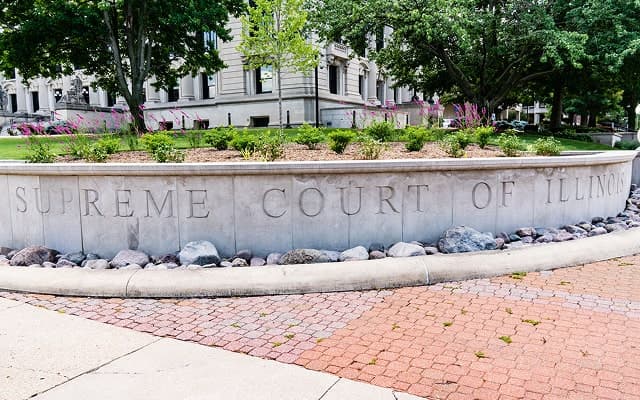
As of 2023, Illinois was the sixth most populous state in America, with over 12 million residents. Illinois residents are served by a unified, three-tiered court system comprising the Supreme Court, Appellate Court, and Circuit Court. The state's court system handles over 1.4 million new filings annually.
Illinois court records are official documents created or filed with the court following the state's court rules. Court records for any particular case typically begin with a complaint (in a civil case) or an indictment (in a criminal case) and include the following:
Docket Sheet
This document contains the names of the attorneys, plaintiff, defendant, and judge. It also lists all the documents referenced in the trial and a summary of each.
Judgments and Orders
This document clearly states the court's decision and clarifies issues relating to the decision, such as who won and any applicable punishments or court orders.
Transcripts
Transcripts record precisely what was said and who said it. These records are taken from an electronic recording of the proceedings or a real-time transcriber.
Evidence
This includes written documents, visual images, or verbal recordings which any party in a case uses to prove the validity of facts in the case.
Court Minutes
This is a written summary of court events, including the beginning and end of the trial, special actions, and minute orders.
Pleadings
Pleadings are formal documents lawyers draft for the trial. They state each party's complaints, defenses, admissions, or other stances related to the case.
Types of Court Cases
In Illinois, court cases are broadly divided into civil and criminal cases. While civil and criminal cases consider violations of people's rights and who is at fault, they differ in structure, burden of proof, and penalties.
Civil Cases
A civil case is generally a dispute between people or businesses. The process begins when one party (plaintiff) files a complaint against another party (defendant). The complaint describes the plaintiff's damages or injury, explains how the defendant caused the harm, shows that the court has jurisdiction, and asks the court to order relief. Civil cases include family-related matters, lawsuits for money, and landlord/tenant disputes.
In a civil case, the court listens to both the plaintiff and defendant sides and decides on the issue. The court may also choose whether or not monetary damages should be awarded and, if so, how much those damages will be.
Criminal Cases
A criminal case begins when the Illinois government brings legal action against a person for committing a crime. The state has the burden of proof to show that the defendant committed a crime in violation of state law beyond any reasonable doubt.
In a criminal case, the jury decides the defendant's guilt or innocence. If found guilty, the defendant may have to pay a fine, serve time in jail or prison, or be placed on probation.
What are the Different Courts in Illinois?
Illinois has a unified three-tier court system made up of the Supreme Court, the Appellate Court and the Circuit Courts, with the state's judicial branch receiving about $531.7 million in General Revenue Fund appropriations for fiscal year 2026.
| Court Level | Court Name | Jurisdiction | Key Functions |
|---|---|---|---|
| Appellate | Supreme Court | Statewide; seven justices | Final appeals, court rules, attorney regulation and administration of the court system |
| Appellate | Appellate Court | Appeals from circuit courts in five districts; 54 judgeships | Reviews trial court decisions in three-judge panels and certain state agency orders |
| General Jurisdiction | Circuit Courts | All civil, criminal, family, juvenile and traffic cases in 25 judicial circuits | Trials, hearings and judgments heard by circuit judges and associate judges |
How Many Federal Courts Are In Illinois?

Illinois has three federal district courts: the Northern, Central, and Southern District Courts. These courts can handle civil cases where the parties come from different states and the amount in dispute is over $75,000.
They also deal with cases that involve the U.S. Constitution or federal laws, including those in the U.S. Code. Additionally, these courts oversee specific areas ruled by federal law, such as bankruptcy, patents, copyrights, and admiralty law.
Judges in these courts are nominated by the U.S. President and confirmed by the Senate. The Northern District has 22 judges, while the Central and Southern Districts each have four judges. People can appeal decisions from all three courts to the Seventh Circuit Court of Appeals.
How Many Court Cases Are Filed Each Year in Illinois?
Illinois circuit courts received about 1.63 million new filings in calendar year 2025, with traffic and conservation cases making up about half of the total. Clearance rates, calculated as cases closed divided by new and reinstated cases, ranged from 82.1% to 97.4% by case category.
| Case Type | Annual Filings | % of Total | Common Offense/Subtype | Clearance Rate |
|---|---|---|---|---|
| Traffic | 809,395 | 49.7% | Traffic, conservation and ordinance violations | 82.1% |
| Criminal | 233,504 | 14.3% | Felonies, misdemeanors and DUI offenses | 95.9% |
| Civil | ~317,195 | ~19.5% | Law claims, evictions, foreclosures, chancery, probate and guardianship matters | ~88.5% |
| Small Claims | ~93,200 | ~5.7% | Consumer debt, security deposits and other claims of $10,000 or less | ~88.5% |
| Domestic Relations | 58,056 | 3.6% | Dissolution of marriage, parentage, adoption and orders of protection | 87.5% |
| Juvenile | 20,319 | 1.2% | Delinquency, abuse and neglect cases | 97.4% |
| Other | 96,732 | 5.9% | Other categories reported by the circuit courts, including miscellaneous criminal matters | 91.3% |
| Total | 1,628,401 | 100.0% | — | 86.6% |
How Do I Look Up Court Records in Illinois?

The State of Illinois has a statewide online database known as SearchIL that allows users to search for filings and activities in a case, including motions, appeals, and orders.
To use this database, interested persons must first register. The database has strict rules about the level of access each type of user can have and has implemented myriad security mechanisms to ensure privacy.
Cases that are not available on the database can be accessed at the courthouse where the case was heard. Interested persons can submit in-person document requests to the respective clerk's office of the appropriate court. Some clerks also offer remote access options to those who cannot attend the courthouse. Interested persons are advised to contact the clerk's office of the courthouse holding a record to find out the different access options and procedures for obtaining records.
Residents of Illinois may view federal court records using the federal court case locator. Alternatively, they may contact the appropriate court clerk's office via telephone.
Number of Active Judges — State & Federal
Illinois Supreme Court justices, appellate judges and circuit judges are chosen in partisan elections and face retention votes, while associate judges are appointed and federal district judges serve for life. The circuit court count is an estimate, so the total is also estimated.
| Court | Jurisdiction | Active Judges | Selection Method |
|---|---|---|---|
| Illinois Supreme Court | Statewide appellate | 7 | Partisan election by district; ten-year terms; retention elections |
| Illinois Appellate Court | Intermediate appellate in five districts | 54 | Partisan election by district; ten-year terms; retention elections |
| Circuit Courts (circuit and associate judges) | General jurisdiction trial courts in 25 judicial circuits | ~1,000 | Circuit judges elected in partisan elections to six-year terms with retention votes; associate judges appointed by circuit judges to four-year terms |
| U.S. District Court, Northern District of Illinois | Federal trial court | 22 | Presidential nomination and Senate confirmation; lifetime appointment |
| U.S. District Court, Central District of Illinois | Federal trial court | 4 | Presidential nomination and Senate confirmation; lifetime appointment |
| U.S. District Court, Southern District of Illinois | Federal trial court | 4 | Presidential nomination and Senate confirmation; lifetime appointment |
| Total Active Judges | — | ~1,091 | — |
What Court Records Are Not Available to the Public in Illinois?
Most filed documents and case information in Illinois are considered open records. However, some records may be sealed or made confidential to protect the parties in the case. Some of these records may include:
- Adoption records
- Mental Health records
- Juvenile records
- Juvenile Abuse/Neglect
- Juvenile Delinquency
- Proposed Orders
Average Case Processing Time & Clearance Rates
Processing times in Illinois vary by case type and circuit, from a few months for routine traffic and small claims matters to well over a year for felony and civil cases in busy counties. The figures below are estimates.
| Case Type | Court Level | Average Processing Time | Description | Clearance Rate |
|---|---|---|---|---|
| Traffic & Parking | General Jurisdiction | ~1–6 months | Most tickets are resolved by payment, court supervision or a short hearing | 82.1% |
| Small Claims | General Jurisdiction | ~3–8 months | Hearings or bench trials after service on the defendant, with judgment or settlement | ~88.5% |
| Misdemeanor Criminal | General Jurisdiction | ~6–15 months | Arraignment, pretrial conferences, and plea or bench trial | ~95.9% |
| Civil Cases | General Jurisdiction | ~18–30 months | Pleadings, discovery and motions, with most cases settled, defaulted or dismissed before trial | ~88.5% |
| Domestic Relations | General Jurisdiction | ~6–12 months | Dissolution and parentage cases resolved by agreement or contested hearing | 87.5% |
| Felony Criminal | General Jurisdiction | ~12–24 months | Preliminary hearing or indictment, pretrial motions, then plea or jury trial | ~95.9% |